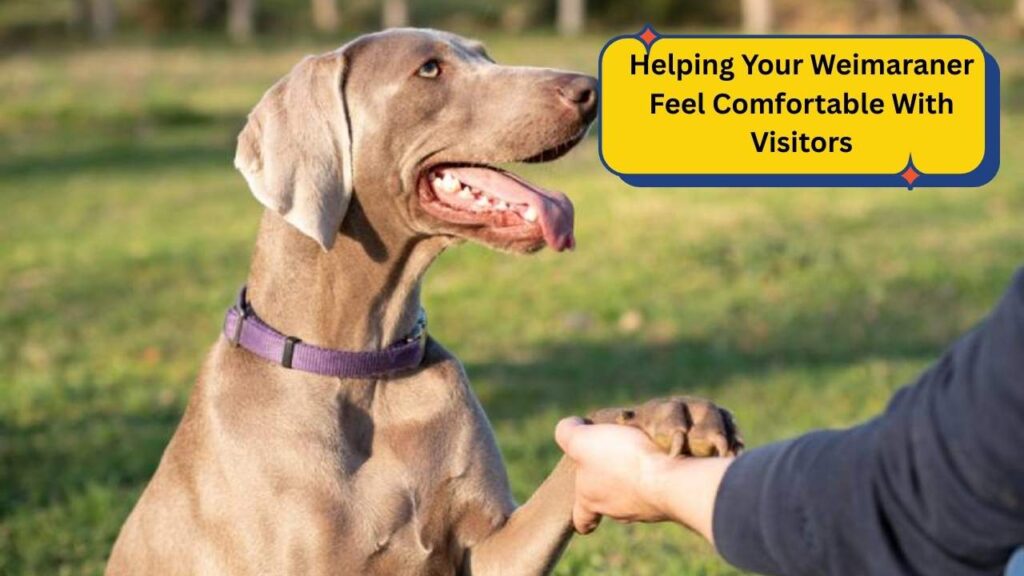

Weimaraners are known for forming strong bonds with their families and staying closely connected to daily home life. Because of this, changes in the home environment, like visitors arriving, can feel like a big event.
Some dogs greet guests with excitement, while others become unsure or overly alert. A Weimaraner’s reaction often depends on past experiences, energy level, and how the situation is handled.
Visitors bring new voices, smells, and movement into the home. For a dog that likes routine, these sudden changes can feel confusing at first, even if there is no real danger.
Helping your dog feel comfortable during these moments creates a calmer home for everyone. With small, steady habits, visits can become easier and more relaxed over time.
Helping Your Weimaraner Feel Comfortable With Visitors
Weimaraners are alert and people-aware, which means they quickly notice when someone new enters their space. This awareness can appear as excitement, barking, or watchful behavior.
Comfort grows when visits follow a predictable pattern. Calm introductions, clear routines, and a safe place to rest help the dog understand that guests are a normal part of life.
Why Visitors Feel Like a Big Event
Dogs rely heavily on routine. When a doorbell rings or someone enters unexpectedly, the sudden change can trigger alert behavior, especially in attentive breeds like Weimaraners.
Your dog may bark, move quickly toward the door, or watch closely. These reactions often come from curiosity and alertness, not from a wish to cause trouble.
Understanding this helps owners stay calm. When the human response is relaxed and steady, the dog often begins to mirror that calmer energy.
First Moments Matter Most
The first minute when a visitor arrives often shapes the entire interaction. High excitement at the start can make the dog more unsettled for the rest of the visit.
Keeping greetings low-key helps. Asking guests to enter calmly, avoid loud voices, and move slowly gives the dog time to observe without feeling overwhelmed.
A leash or gentle guidance during these first moments can help maintain control while the dog adjusts to the new presence in the home.
Create a Safe Resting Spot
Every Weimaraner benefits from having a quiet space where they can relax when things feel busy. This area should be away from heavy foot traffic and loud conversation.
A comfortable bed or mat in this spot helps the dog learn that resting there means calm time. Over time, this place becomes a safe retreat during visits.
Allowing the dog to step away when needed prevents stress from building. A dog that can take breaks usually handles social situations better overall.
Helpful Habits During Visits
Simple habits can make a big difference in how your dog responds when guests are in the home.
- Ask visitors not to rush toward the dog
- Keep voices at a normal, calm level
- Reward calm behavior with gentle praise
- Allow the dog to approach in their own time
- Avoid crowding the dog in tight spaces
These small actions reduce pressure. When the dog feels in control of distance, comfort grows more naturally.
Excitement vs. Nervous Energy
Some Weimaraners react to visitors with jumping, spinning, or fast movements. This often comes from excitement rather than fear, but it can still feel overwhelming.
Other dogs may hang back, watching quietly or moving away. This can be a sign they need more time to feel safe in the situation.
Both reactions are forms of communication. Responding calmly and giving space helps bring energy back to a balanced level.
Common Visitor Situations
Different types of visits can affect your dog in different ways. Understanding the situation helps you prepare ahead of time.
| Situation | Possible Dog Reaction | Helpful Approach |
|---|---|---|
| One quiet guest | Curious but calmer behavior | Slow greeting, soft voices |
| Group of people | Higher excitement or alertness | Controlled entry, early breaks |
| Children visiting | Fast movements increase energy | Supervision, calm play guidance |
| Short delivery visit | Brief barking at door sounds | Quick reassurance, calm tone |
| Overnight guests | Longer adjustment period | Maintain routine, rest space |
Planning for these differences supports smoother visits and fewer surprises.
Teaching Calm Greetings
Dogs can learn that calm behavior brings positive attention. Practicing low-energy greetings even without visitors helps build this habit.
Ask your dog to sit or pause before interacting. Short moments of stillness teach them that calmness is part of social interaction.
Consistency matters. Repeating this pattern helps the dog understand what to expect when new people arrive.
Managing Energy Before Visits
A Weimaraner with extra energy may find it harder to stay calm around guests. Planning activity earlier in the day often helps reduce this restlessness.
A steady walk or play session before visitors arrive can release some energy. This makes it easier for the dog to settle afterward.
When physical needs are met, mental balance often improves too. A relaxed dog usually handles social changes more comfortably.
Reading Your Dog’s Signals
Watching body language helps you understand how your dog feels during a visit. Small signals often appear before bigger reactions.
- Turning away from people
- Yawning or licking lips frequently
- Moving to their resting area
- Slower tail movement
- Avoiding eye contact
These signs may show your dog needs a break. Respecting these signals helps prevent stress from building.
Gradual Comfort Over Time
Comfort with visitors often improves step by step. Short, positive visits usually work better than long, intense gatherings at the start.
Each calm experience builds confidence. When visits end on a peaceful note, the dog learns that guests come and go without anything negative happening.
Patience plays a big role. Progress may be slow, but steady exposure often leads to noticeable changes over time.
When Routine Stays Steady
Keeping regular meal times, walks, and rest periods during visits helps your dog feel secure. Routine reminds them that life is still predictable even with new people around.
If everything changes at once, confusion can increase. A stable schedule acts like an anchor, helping the dog settle more easily during social activity.
Small structure brings comfort. Dogs often relax faster when their daily rhythm stays familiar.
Building Positive Associations
Visitors can become part of pleasant experiences. Offering a favorite toy or quiet activity while guests are present helps create a relaxed connection.
When good things happen around new people, the dog begins to link visitors with comfort rather than uncertainty.
Over time, these positive moments shape future reactions. Many Weimaraners learn to greet guests calmly once visits feel familiar and safe.
A Calm Home for Everyone
Helping your Weimaraner feel comfortable with visitors is a gradual process built on routine, patience, and gentle guidance. Small adjustments often lead to big improvements over time.
Providing a safe space, supporting calm greetings, and watching your dog’s signals all help create smoother social moments. These habits make visits less stressful and more predictable.
With steady experiences and understanding, many Weimaraners learn that guests are simply part of normal life. A relaxed dog helps create a welcoming and peaceful home for everyone involved.