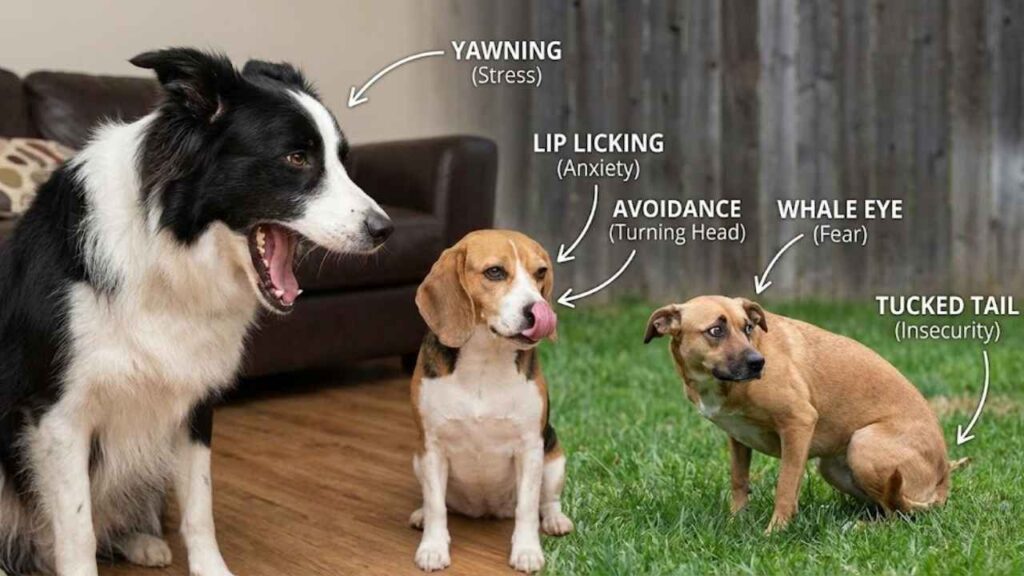

Dogs cannot explain their feelings with words, so they use body language to show when something feels uncomfortable. Small movements, posture changes, and facial expressions often give early clues before bigger reactions appear.
Many of these signals are quiet and easy to miss, especially in busy homes. Learning to notice them helps people understand what a dog might be feeling during daily life situations.
Discomfort does not always mean pain. It can also come from fear, stress, confusion, or simply being unsure about what is happening nearby. These feelings often show through the body first.
When owners recognize these signals early, they can respond calmly. This helps prevent situations from growing more intense and supports a more relaxed, trusting relationship between dogs and people.
Common Body Signals Dogs Use to Show Discomfort
Dogs use clear but subtle body signals to show when they feel uneasy. These signs often appear before barking, growling, or moving away, giving people a chance to adjust the situation gently.
Understanding these signals makes everyday interactions smoother. It helps create an environment where the dog feels heard, safe, and more comfortable in different situations at home or outside.
Turning the Head Away
One common signal of discomfort is turning the head away. A dog may look to the side instead of facing a person, another dog, or an object that feels overwhelming.
This movement often means the dog is trying to avoid direct pressure. It can happen during close face contact, loud interactions, or when someone leans over them quickly.
Respecting this signal helps build trust. Giving a little space often allows the dog to relax instead of feeling the need to use stronger reactions.
Lip Licking When No Food Is Present
Lip licking is normal around food, but when it happens in other situations, it can be a sign of unease. Dogs may lick their lips during tense or confusing moments.
This small action often appears during close handling, loud environments, or unfamiliar encounters. It is usually quick and easy to overlook.
Seeing this signal as communication rather than random behavior helps owners slow down. A calmer approach often helps the dog feel safer.
Yawning in Stressful Moments
Yawning does not always mean a dog is tired. In social or tense situations, yawning can signal discomfort or an attempt to calm themselves.
Dogs may yawn during crowded gatherings, training confusion, or when feeling pressured. It acts like a release for inner tension.
If yawning appears outside normal sleep times, it may help to reduce stimulation. Quiet surroundings often help the dog settle.
Body Freezing
A dog that suddenly becomes still may be showing discomfort. This pause often happens just before a dog chooses what to do next.
Freezing can appear during unwanted handling, when another dog approaches too fast, or when something feels uncertain. It is a serious signal that should not be ignored.
Giving space at this moment helps prevent escalation. The dog is communicating clearly without using sound.
Signals That Often Appear Together
Dogs often show more than one signal at the same time when they feel uneasy.
- Turning head away
- Lip licking
- Yawning
- Slow blinking
- Body stiffness
These signals together suggest rising stress. Recognizing patterns helps owners respond before the dog feels overwhelmed.
Ear Position Changes
Ears tell a lot about a dog’s feelings. When uncomfortable, ears may move back, flatten slightly, or shift constantly as the dog listens carefully.
This shows alertness mixed with uncertainty. The dog is trying to understand what is happening around them.
Watching ear movement along with other signals gives a clearer picture of how the dog feels in that moment.
Tail Movement and Position
A wagging tail does not always mean happiness. A low tail, slow wag, or stiff movement can signal unease rather than excitement.
When the tail tucks slightly or stays low, the dog may be unsure. This is common in new places or during unexpected events.
Looking at the whole body along with the tail helps avoid misunderstandings. Tail signals are only one piece of communication.
How Signals Differ by Situation
Dogs may show discomfort signals in many daily situations, and the setting often influences which signals appear.
| Situation | Possible Body Signals |
|---|---|
| Meeting strangers | Head turning, lip licking |
| Loud noises | Ear movement, body lowering |
| Vet visits | Yawning, freezing, tucked tail |
| Crowded spaces | Slow movement, scanning, tension |
| Rough play | Stiff posture, stepping away |
Understanding the context helps interpret signals more accurately.
Moving Away or Avoiding
Walking away is a clear and healthy signal. Dogs often choose distance instead of confrontation when they feel uncomfortable.
This may happen during petting, busy environments, or social interactions. The dog is simply saying they need space.
Allowing this choice builds confidence. Forcing interaction can make discomfort stronger.
Subtle Facial Expressions
Eyes and mouth shape also change during discomfort. Dogs may show wider eyes, less blinking, or a closed, tight mouth.
These expressions can be brief but meaningful. A soft face usually means relaxation, while tension suggests uncertainty. Observing these small details adds to understanding overall body language.
Why Early Signals Matter
Early signals give people a chance to help before stress grows. When ignored, a dog may move to louder signals like barking or snapping.
Responding early shows the dog that communication works. This builds trust and reduces the need for stronger reactions later. Calm adjustments often solve the situation quickly.
How Owners Can Respond
- Give the dog more space
- Reduce noise or activity
- Slow down movements
- Speak in a calm tone
- Allow the dog to rest
When discomfort signals appear, simple changes can help. These steps lower pressure and support emotional balance.
Listening Without Words
Dogs speak through posture, movement, and expression. Recognizing these signals helps create a more understanding and respectful relationship.
Discomfort signals are not bad behavior. They are communication tools that help dogs explain how they feel in the moment.
By noticing and responding gently, owners help dogs feel safe, which leads to calmer behavior and stronger trust over time.