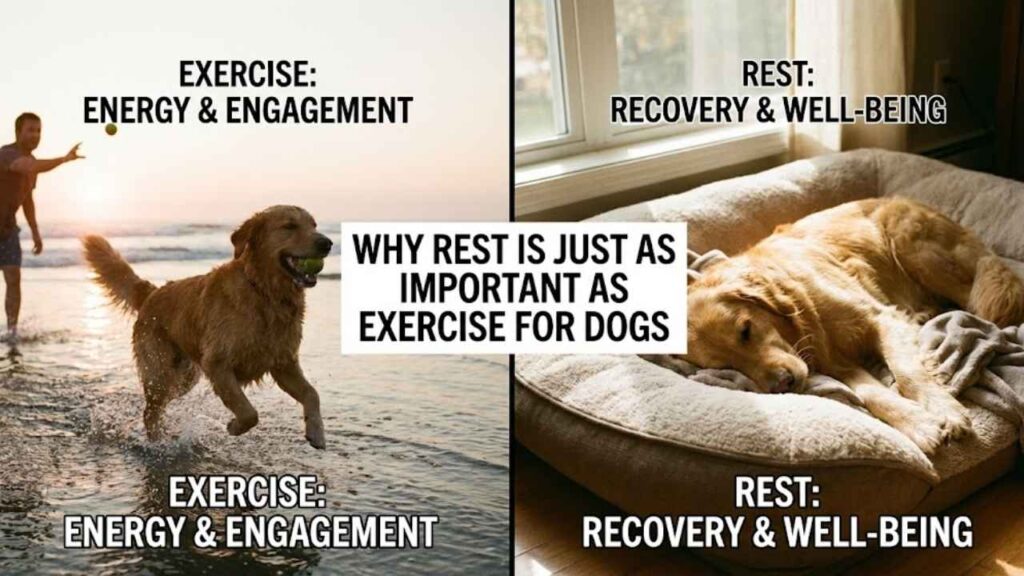

Exercise is often seen as the main key to a healthy dog, but rest plays an equally important role in overall well-being. Both movement and recovery work together to support the body and mind.
Many owners focus on walks, playtime, and activity but forget that rest is when the body repairs itself. Without enough downtime, even an active dog can begin to feel tired or unsettled.
Dogs naturally move between energy and relaxation throughout the day. This balance helps muscles recover, emotions settle, and the brain process daily experiences in a calm and steady way.
Understanding the value of rest helps owners create healthier routines. When activity and quiet time are balanced, dogs often show better behavior, steadier moods, and improved comfort overall.
Why Rest Is Just as Important as Exercise
Rest is not simply the absence of activity. It is an active part of health that supports physical recovery, emotional balance, and mental processing after stimulation, movement, or busy environments.
Dogs that get enough rest often handle daily life more calmly. Their bodies feel better, and their minds are less overwhelmed by constant excitement or stimulation.
Seeing rest as a basic need, rather than extra time, helps shape routines that support long-term well-being in a gentle and natural way.
Muscles Need Recovery Time
After exercise, muscles work hard and use energy. Rest allows muscle fibers to repair and return to a comfortable state, preventing ongoing fatigue and physical strain.
Without proper recovery, muscles can feel tight or tired. Over time, this may reduce a dog’s interest in movement or make activity feel less enjoyable than before.
Balanced rest helps maintain strength and flexibility. It keeps movement feeling smooth and comfortable instead of heavy or tiring.
The Brain Also Needs Quiet Time
Exercise stimulates the brain as well as the body. New sights, sounds, and interactions require mental processing, which continues even after activity ends.
Rest periods allow the brain to organize these experiences. This helps dogs feel calmer and less overwhelmed by everything they encountered earlier in the day.
Mental recovery is just as important as physical recovery. Without it, dogs may seem restless even after exercise.
Emotional Balance Comes From Downtime
Busy environments and high activity levels can raise emotional excitement. Rest gives the nervous system a chance to settle and return to a balanced state.
Dogs that do not get enough quiet time may appear over-alert or easily startled. Their body remains in a state of readiness instead of relaxation.
Regular downtime helps emotional systems reset. This supports steadier behavior and smoother responses to daily events.
Signs a Dog May Need More Rest
Dogs show small changes when they are tired but not getting enough true rest, and these signs often appear in behavior before physical tiredness becomes obvious.
- Restlessness even after exercise
- Slower movement during play
- Difficulty settling at night
- Increased sensitivity to noise
- Less interest in interaction
These signs suggest the body and mind need recovery, not more stimulation. Adding calm rest periods often improves comfort and overall mood naturally.
Sleep Quality Matters Too
Rest includes both light relaxation and deeper sleep. During deeper sleep, the body carries out important repair and recovery processes.
If sleep is often interrupted, recovery may be incomplete. Dogs may seem tired even after spending many hours lying down.
A quiet, comfortable sleep area supports deeper rest. Good sleep helps restore energy and balance.
Activity and Rest Work Together
Exercise and rest support each other, forming a natural cycle where movement uses energy and rest restores it, helping the body stay balanced and comfortable.
| Activity Type | Why Rest Is Needed Afterward |
|---|---|
| Long walks | Muscles and joints recover |
| Play sessions | Nervous system calms down |
| Training time | Brain processes learning |
| Social outings | Emotions settle |
| New environments | Stress levels return to normal |
Without recovery time, the cycle breaks. Energy drops, focus decreases, and comfort levels change, even if the dog appears active on the surface.
Rest Supports Learning
Learning does not end when training stops. The brain continues to process new information during rest, strengthening understanding and memory.
Dogs that rest well often show better recall of learned cues. Their mind has had time to organize experiences.
Quiet time after learning supports clearer progress. It helps new skills settle naturally.
Preventing Overstimulation
Constant activity can keep the nervous system in a high-alert state. Rest helps lower this state and prevents mental overload.
Dogs that move from one activity to another without breaks may struggle to settle later. Their body remains ready for action. Planned downtime helps prevent this cycle. Calm breaks make the day feel more balanced.
Physical Comfort Improves With Rest
Joints and connective tissues benefit from rest just like muscles do. Recovery time reduces strain and supports long-term comfort.
Dogs that rest well often move more easily. Their body feels less tense and more flexible. Comfort during rest supports comfort during movement. The two are closely connected.
Building Healthy Daily Routines
A balanced day includes both activity and quiet periods, arranged in a gentle rhythm that allows energy to rise and fall naturally without constant pressure.
- Morning walk followed by rest
- Playtime with quiet break after
- Calm evenings before sleep
- Short learning sessions with downtime
- Safe resting area always available
These patterns help the body expect recovery. Predictable rest supports relaxation and prevents the build-up of tension from too much stimulation.
Rest Helps Behavior Stay Steady
Dogs that rest enough often show fewer signs of irritability or restlessness. Their emotional systems are not stretched beyond comfort.
Steady rest supports patience and focus. Dogs are more able to respond calmly to daily events. Behavior balance often reflects rest balance.
Respecting Individual Needs
Each dog has its own rhythm. Age, personality, and activity level influence how much rest feels comfortable and natural.
Observing patterns helps owners adjust routines gently. Some dogs need more quiet time than others. Flexibility supports well-being.
Rest Is Part of True Health
Rest is not laziness or lost time. It is an essential part of physical recovery, emotional balance, and mental processing that supports overall health.
When owners value rest as much as exercise, dogs often feel more comfortable and settled. Balance between activity and recovery leads to steadier energy, calmer behavior, and a healthier daily rhythm.