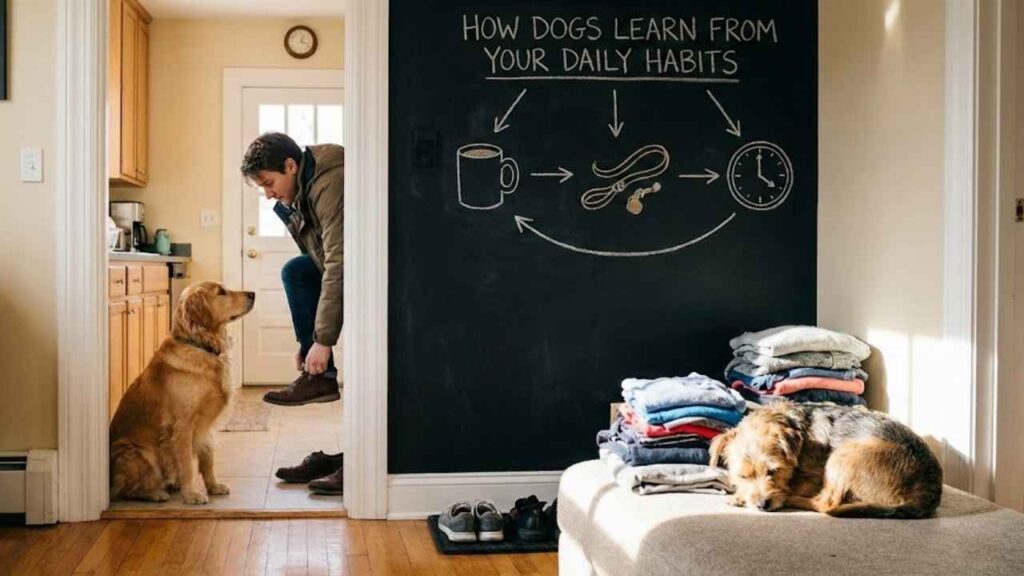

Dogs learn more from our daily lives than we realize. Even when we are not training them, they are watching, listening, and picking up clues from everything we do. Our routines, movements, and reactions help them understand what to expect and how to behave.
From the moment you wake up to the time you go to bed, your habits are teaching your dog. Simple actions like feeding time, walks, and the way you speak all shape their behavior. Everyday life becomes their classroom, and you are their main guide.
How Dogs Learn From Your Daily Habits
Dogs are always watching what you do and building patterns from it. When you wake up, prepare meals, grab your shoes, or sit down to relax, your dog connects those actions with what usually happens next. Over time, these small daily habits become signals.
Your dog learns when it is time to eat, go outside, play, or stay calm. This routine gives them a sense of safety because they can predict their day. A predictable environment helps dogs feel confident and reduces stress-related behaviors.
Your reactions also teach important lessons. Dogs notice your tone of voice, facial expressions, and body movements. A calm voice and relaxed posture tell them everything is okay, while tension or loud reactions can make them nervous or excited.
If you consistently reward calm behavior with attention and ignore unwanted behavior, your dog learns what works. Without formal training sessions, your everyday actions become a guide that shapes your dog’s manners, emotions, and overall behavior.
Key Overview: How Dogs Learn From Your Daily Habits
| Your Daily Habit | What Your Dog Notices | What Your Dog Learns | Effect on Behavior |
| Waking up at a set time | Morning movement and activity | When the day starts | Builds routine and reduces anxiety |
| Feeding at regular times | Food preparation sounds and locations | When to expect meals | Encourages patience and structured eating |
| Picking up leash or shoes | Objects linked with going outside | Walk or outing is coming | Creates excitement and readiness |
| Your tone of voice | Emotional sound (calm, happy, angry) | Whether behavior is good or unwanted | Shapes emotional responses |
| Body language | Posture, speed of movement, gestures | How to feel in a situation (calm or alert) | Influences confidence and stress levels |
| Reacting to behavior | Attention, praise, or ignoring | Which actions get results | Reinforces good habits or unwanted ones |
| Daily energy at home | Noise level and overall mood | How to match the environment | Affects overall calmness or hyperactivity |
| Consistency in rules | Same or changing boundaries | What is allowed and what is not | Builds clear manners and understanding |
Dogs Are Expert Observers
Dogs pay close attention to people. They watch what you do, how you move, and what happens next. Over time, they start to notice patterns. When the same actions lead to the same results, dogs quickly learn what to expect.
For example, if you always feed your dog after your morning coffee, your dog may sit near their bowl as soon as you pick up your mug. They are not guessing they have learned your routine. This ability to observe and connect actions with outcomes is one of the main ways dogs understand the world.
Daily Routines Teach Structure
Routine makes dogs feel safe. When life follows a pattern, dogs know what is coming next. This reduces stress and helps them behave better.
If you wake up at the same time every day, your dog learns when the day begins. If you take them outside right away, they learn when bathroom breaks happen. If walks happen every evening, they learn when to expect exercise.
Because of this, your normal schedule becomes a form of training. A consistent routine teaches your dog patience, timing, and good habits without you even realizing it.
Your Actions Become Signals
Many of your small actions become “signals” to your dog. These are called cues. You may not teach them on purpose, but dogs still learn them.
- Picking up the leash means a walk is coming.
- Opening a certain cupboard means food or treats.
- Putting on a jacket means you are leaving.
- Sitting on the couch means quiet time.
Dogs connect these actions with what usually happens next. That’s why they may get excited, calm, or alert before anything actually happens. They are reading your behavior like a guidebook.
Tone of Voice Matters More Than Words
Dogs do not understand language the same way humans do, but they are very good at reading tone. Your voice tells them how to feel about a situation.
A soft, happy voice usually means they did something right. A sharp or loud voice can signal that something is wrong. If you speak gently when your dog is lying calmly, they learn that calm behavior brings positive attention. If you raise your voice when they bark too much, they connect barking with a negative reaction.
Over time, your tone shapes their behavior. Even without formal training, your voice becomes a powerful teaching tool.
Body Language Is a Big Teacher
Dogs rely heavily on body language. They notice your posture, speed, and movements.
If you move quickly and stiffly, your dog may become excited or nervous. If you move slowly and calmly, your dog is more likely to relax. Leaning toward them can feel like pressure, while turning sideways can feel less threatening.
When you stay calm during busy or stressful situations, your dog learns that there is nothing to fear. When you act tense, your dog may think there is danger, even if there isn’t.
Your Emotions Affect Your Dog
Dogs are sensitive to human emotions. They often mirror how we feel. When you are calm, your breathing is steady and your movements are relaxed. This helps your dog stay calm too.
When you are stressed or upset, your dog may become restless, clingy, or anxious. They may not know why you feel that way, but they can sense the change.
By managing your own emotions and staying steady, you help your dog feel secure. This emotional learning happens every day and plays a big role in their overall behavior.
Consistency Builds Good Behavior
Dogs learn best when rules stay the same. If jumping on the couch is allowed one day but not the next, your dog becomes confused. They don’t understand changing rules easily.
If you always reward calm behavior and ignore unwanted behavior, your dog learns what works. But if you sometimes give attention for bad behavior, they may repeat it because it got a reaction.
Being consistent in how you respond teaches your dog clear boundaries. This makes learning faster and reduces problem behaviors.
You Teach Without Realizing It
Many behaviors form without formal training. If you give your dog attention every time they nudge your hand, they learn nudging works. If you open the door when they bark, they learn barking gets results.
Dogs repeat behaviors that lead to something good. This means your reactions even small ones are lessons. You are always showing your dog what is effective.
By becoming aware of this, you can choose which behaviors to encourage and which to ignore.
Calm Habits Create Calm Dogs
The energy in your home matters. A peaceful environment with clear routines helps dogs feel balanced. Loud, sudden reactions or chaotic schedules can lead to anxious or overexcited behavior.
Simple habits like speaking calmly, moving with purpose, and keeping a steady schedule teach your dog how to act. Over time, they match your energy. Your daily lifestyle becomes the model your dog follows.
Conclusion
Training is not just something that happens during special sessions. It happens all day, every day. Dogs learn from your routines, your voice, your movements, and your emotions. They connect your habits with outcomes and adjust their behavior based on what they observe.
By being consistent, calm, and aware of your actions, you can guide your dog naturally. Your everyday life becomes the classroom, and you are the teacher even when you don’t realize it.