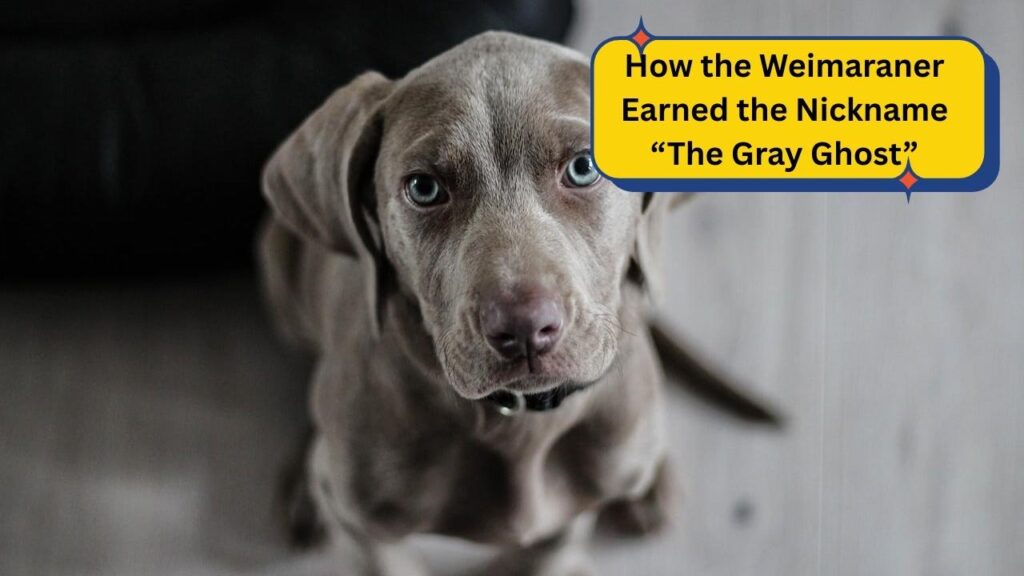

The Weimaraner is a dog that many people remember the first time they see one. Its smooth gray coat, soft shine, and calm, watchful eyes give it a look that feels both elegant and gentle at the same time. Because of this special appearance and the way the dog moves, the breed earned a nickname that has stayed with it for many years.
Nicknames often come from something people notice again and again. In the case of the Weimaraner, the name “Gray Ghost” did not appear by accident. It grew from the dog’s color, its quiet way of moving, and the environments where it was first seen working closely with people.
Understanding where this nickname came from helps us see the breed in a deeper way. It connects history, appearance, and natural behavior into one clear picture that still makes sense today.
This story is not only about the past. Even in modern homes, many of these same qualities can still be noticed, which is why the nickname continues to feel meaningful.
How Weimaraner Earned Nickname “The Gray Ghost”
The nickname “Gray Ghost” mainly comes from two features that stood out strongly to people in the past: the Weimaraner’s silver-gray coat and its smooth, quiet movement in outdoor settings. These two qualities together created an image that was hard to forget.
Hunters often saw these dogs moving through forests, fields, and wooded areas during early morning or late evening hours. In soft light, their coat seemed to blend into the land, making them look less solid and more like part of the surroundings.
This mix of color, light, and motion created the feeling that the dog could appear softly in view and then fade away just as gently.
The Unusual Gray Color
The Weimaraner’s coat color is different from most other breeds. It can look like silver metal, soft smoke, or light ash depending on sunlight and shadow. This natural gray tone is one of the first reasons people began comparing the dog to something ghost-like.
In natural outdoor spaces, gray matches many common colors. Tree trunks, rocks, dried grass, and shaded soil often carry similar tones. Because of this, the dog’s body could blend with the background while moving, especially from a distance.
This blending effect did not make the dog invisible, but it made the outline softer. To observers, the dog sometimes looked less sharp and more like a moving shadow across the land.
Movement That Feels Light and Silent
The Weimaraner does not usually move with heavy steps or loud energy. Its body moves in a balanced and flowing way that looks smooth, steady, and controlled in both open land and quiet spaces.
- Hunters often noticed details like:
- Steps that seemed soft instead of pounding against the ground.
- Running that looked smooth rather than rushed or wild.
- Calm approaches that did not disturb the quiet environment.
- Steady movement even when covering longer distances.
This quiet style of movement added strongly to the ghost-like image. When paired with the gray coat, the dog’s motion felt gentle, almost like drifting through space instead of pushing through it.
The Role of Light and Time of Day
Hunting work often happened during times when light was softer, such as early morning or evening. During these hours, colors appear less bright, and shadows stretch longer across the land.
The Weimaraner’s gray coat reflected this soft light in a way that made it look pale and misty. From a distance, its shape could look unclear, almost like something moving quietly through thin fog.
This natural lighting effect helped strengthen the “ghost” idea. It was not about mystery, but about how color and light worked together in nature.
Why This Quality Was Helpful
Blending into the environment was not just interesting to look at; it also helped the dog do its work more effectively. A dog that moved quietly and did not stand out too sharply could work more smoothly in outdoor tasks.
This ability made the breed dependable and respected. Over time, this quiet, steady style became part of how people described the dog, and the nickname followed naturally.
How the Nickname Took Shape
When people repeatedly describe a dog using similar words, a nickname often forms naturally. “Gray Ghost” captured both the color and the feeling of movement perfectly, and the phrase stayed easy to remember.
| Feature | Why It Fits the Name |
|---|---|
| Gray coat | Looks like smoke, shadow, or soft mist |
| Smooth movement | Appears light and controlled |
| Blending ability | Harder to notice in soft light |
| Calm presence | Feels steady rather than loud |
Because these traits stayed consistent over time, the nickname remained. It became a simple way to describe a very clear image people continued to recognize.
How Distance Changed Way People Saw Them
From far away, details become softer and less clear. With the Weimaraner’s light gray coat and smooth body shape, the dog’s outline could blur slightly when viewed across open land or wooded areas.
Hunters sometimes described the dog as looking like a pale shape moving quietly through the background. This visual effect made the dog seem less solid and more like part of the landscape itself.
How the Coat Reflects the Environment
The Weimaraner’s coat does not shine brightly like some other colors. Instead, it reflects light in a soft way that matches natural surroundings. In shade, it can look darker and more shadow-like.
In open light, it may appear lighter, almost silver. This ability to change slightly depending on light added to the ghost-like comparison over time.
Why Quiet Presence Matters
Some dogs bring strong, loud energy into a space, but the Weimaraner often carries a quieter presence that feels steady rather than overwhelming or chaotic.
- This quiet presence shows in:
- Calm walking patterns instead of sudden rushing.
- Gentle observation before reacting.
- Smooth body movement indoors and outdoors.
- Balanced energy rather than constant excitement.
This steady style made the nickname feel respectful instead of dramatic. It describes a calm, graceful presence rather than something frightening or mysterious.
The Nickname as a Symbol of Elegance
Over time, “Gray Ghost” became more than just a field description. It turned into a symbol of the breed’s elegance, balance, and controlled energy. People began using it with admiration.
The name highlights beauty in motion rather than loud or flashy traits. It paints a picture of quiet strength and smooth confidence.
How Owners Still Experience This Today
Modern owners often notice that their Weimaraner can move through a home almost without sound. Their steps can be light, and their presence can feel gentle even in small spaces.
This quiet way of moving makes the nickname feel alive even now. The setting changed, but the qualities stayed.
A Name That Connects Past and Present
The nickname creates a bridge between the breed’s working history and its role as a family companion today, showing how old traits still live in modern life.
| Past Situation | Present-Day Example |
|---|---|
| Blending into nature | Calm movement outdoors |
| Quiet tracking work | Gentle indoor movement |
| Focused field attention | Watching family activities closely |
| Controlled motion | Smooth walking beside owners |
This connection between past and present helps people understand the breed as a whole. It shows how history continues shaping everyday behavior.
What This Nickname Helps Us Understand
The name “Gray Ghost” links the Weimaraner’s history, appearance, and movement into one clear idea. It reminds us that the breed was shaped by both physical traits and working purpose.
Understanding this helps owners see their dog with more awareness. The nickname reflects real qualities that still live in the breed today, connecting its past with the present in a simple and meaningful way.