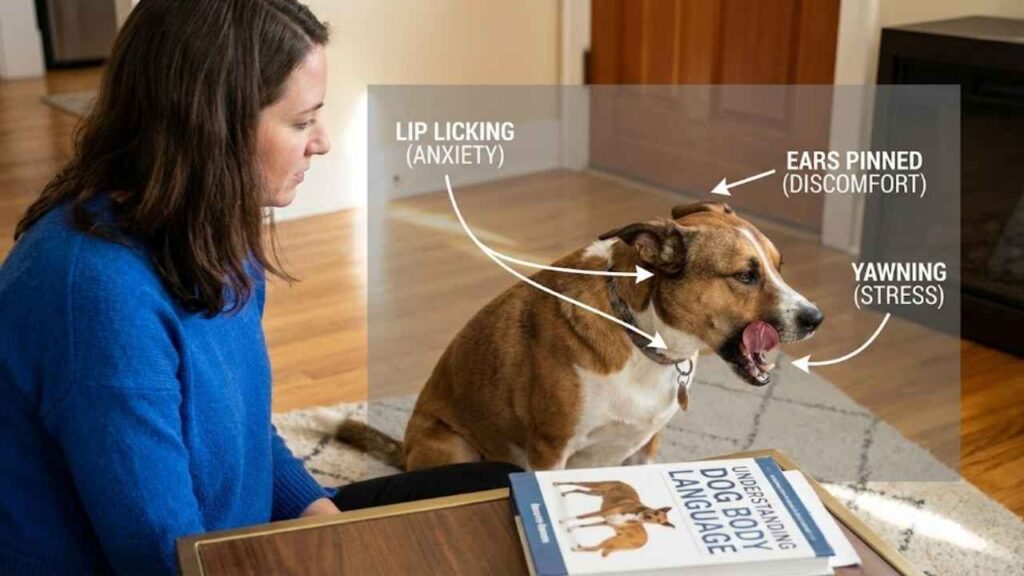

Dogs experience stress just like people do, but they cannot explain it with words. Instead, they show small changes in body language, behavior, and daily habits that can easily go unnoticed.
These early signs are often quiet and brief, appearing before a dog reacts strongly or becomes overwhelmed. Learning to spot these signals helps owners respond early and support their dog calmly.
Stress can come from many things, including noise, new places, unfamiliar people, or changes in routine. Each dog reacts differently, so paying attention to individual patterns is very important.
When stress is noticed early, small adjustments often make a big difference. Gentle responses help dogs feel understood, which builds trust and supports emotional balance over time.
How to Notice Early Signs of Stress in Your Dog
Early stress signals are a dog’s way of communicating discomfort before behavior becomes louder or more obvious. These signs give owners a chance to slow down and adjust the situation.
Recognizing these clues helps prevent stress from building. A dog that feels heard and supported is more likely to stay calm and respond positively to the environment around them.
Changes in Body Posture
A stressed dog often shows subtle posture shifts. The body may look slightly lowered, muscles may tighten, or movements may appear slower than usual in uncertain situations.
These changes can happen quickly, especially in new or busy environments. Watching posture closely gives early information about how your dog is feeling before bigger reactions occur.
When posture softens again, it usually means the dog is more comfortable. Observing these shifts helps guide calm responses.
Increased Watching and Scanning
Dogs under stress often become very alert. They may watch surroundings closely, turn their head toward small sounds, or track movement more than usual.
This scanning behavior shows the dog is trying to understand the environment. It is a sign that they are unsure and gathering information to feel safe.
Reducing stimulation in these moments often helps. Calm surroundings support relaxation.
Early Facial Signals
The face often shows stress before the rest of the body. Small changes appear around the eyes, mouth, and ears when a dog feels uneasy.
Lip licking, yawning, or a tight mouth can appear even when the dog is not tired or hungry. These are common stress indicators.
Watching facial expressions during interaction helps you notice discomfort quickly and respond gently.
Small Movements That Show Unease
Many stress signals involve small actions that seem harmless but carry meaning when they appear in certain situations.
- Lip licking without food nearby
- Yawning during activity
- Turning the head away
- Slow blinking
- Shifting weight repeatedly
These signals are part of normal communication and should not be punished. Recognizing them early helps reduce pressure and keeps interactions calm and safe.
Changes in Breathing Patterns
Stress can affect breathing. A dog may pant lightly even in cool conditions or breathe faster during mild activity when feeling unsure.
This happens because the body is responding to tension. The dog is preparing to cope with the situation, even if nothing visible seems wrong. Slowing the pace and providing quiet space often helps breathing return to normal.
Situations That Commonly Trigger Stress
Certain environments naturally cause more stress for dogs, especially when there is loud noise, crowding, or unfamiliar experiences that make it hard for them to predict what will happen.
| Situation | Why It Can Be Stressful |
|---|---|
| Loud gatherings | Noise and sudden movement |
| Vet visits | Unfamiliar handling and smells |
| New locations | Unknown surroundings |
| Busy streets | Traffic and fast activity |
| Rough play | Overstimulation |
Knowing these triggers allows owners to prepare ahead of time and support their dog calmly, reducing the chance that stress will build to a more difficult level.
Changes in Behavior
Behavior shifts often appear when stress continues. A dog may become quieter, clingier, more restless, or less interested in play.
These changes are not random. They show the dog is using different ways to cope with emotional pressure.
Observing daily habits helps detect patterns early. Small differences can reveal rising stress.
Movement Away From Activity
When stress increases, dogs may walk away, hide, or create distance from people, animals, or activities that feel overwhelming, using space as a natural coping method.
- Moving to another room
- Sitting behind furniture
- Turning body sideways
- Avoiding eye contact
- Seeking a quiet corner
Allowing this space helps the dog calm down. Forcing interaction can increase discomfort and make the situation more intense instead of easing stress.
How Routine Helps Spot Stress
A stable routine makes stress changes easier to notice. When daily patterns are predictable, even small differences in behavior become clearer.
Eating, sleeping, and play habits provide useful clues. Sudden shifts often point to emotional changes. Routine acts as a reference point for understanding your dog’s emotional state.
Supporting Calm Responses
Owners can guide their dogs through stress gently by adjusting the environment and interaction style.
- Speak in a soft tone
- Slow your movements
- Provide a safe resting space
- Reduce loud activity
- Keep routines steady
These steps lower emotional pressure and help the dog return to balance more quickly, building trust and making future situations easier to handle calmly.
Why Early Notice Matters
Early stress signals appear before stronger reactions, giving owners a chance to change the situation before the dog feels overwhelmed or forced to respond loudly.
Responding early builds communication. The dog learns that subtle signals are effective. This reduces the need for louder behavior later.
Building Long-Term Confidence
When dogs feel heard and supported during small stress moments, they develop confidence and learn that their environment is safe and predictable over time.
Repeated calm experiences teach resilience. Dogs begin to recover faster from mild stress. This leads to steadier behavior overall.
Understanding Stress as Communication
Stress signals are not bad behavior but a form of communication. They show that a dog is trying to cope with something that feels uncertain or overwhelming.
By noticing these early signs and responding gently, owners help their dogs feel safe and understood. This strengthens trust and supports a calmer, more balanced relationship.