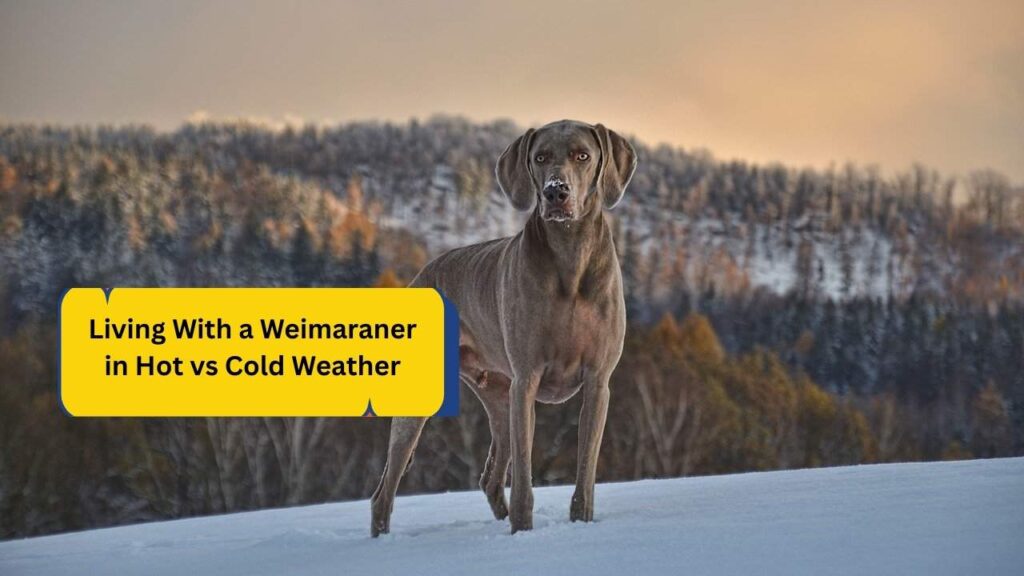

Living with a Weimaraner means sharing life with a dog that loves movement, attention, and being part of daily routines. Their energy and close bond with people make them very aware of their surroundings and comfort.
Weather plays a bigger role in a dog’s daily life than many people first realize. Temperature, air, and ground conditions can all affect how a Weimaraner feels during walks, play, and rest time.
Because this breed has a short coat and an active nature, both hot and cold weather bring different challenges. Small changes in care and routine can help keep them comfortable throughout the year.
Understanding how seasons affect your dog helps you plan ahead. With gentle adjustments, you can support steady energy, calm behavior, and overall comfort no matter what the weather feels like outside.
Living With a Weimaraner in Hot vs Cold Weather
Hot and cold weather affect a Weimaraner in different ways because of their body type and activity level. Their short fur offers limited protection from strong sun or freezing air.
In warm weather, heat can build up quickly during movement. In cold weather, their lean body may lose warmth faster than thicker-coated breeds, especially during long outdoor time.
Knowing these differences helps owners adjust walks, rest areas, and daily habits. These small steps support comfort and help the dog handle seasonal changes more easily.
How Heat Affects the Body
During hot weather, a Weimaraner’s body works harder to stay cool. Active movement in warm air can raise body temperature quickly, especially under direct sunlight.
Dogs cool themselves mainly by panting, which may increase after short activity. Slower movement, more shade, and fresh water help the body return to a comfortable state.
Hot surfaces like pavement can also feel uncomfortable on paws. Shorter outings and cooler times of day often make walks feel easier and more relaxed.
Signs Your Dog Feels Too Warm
Heat discomfort often shows through small behavior changes. Watching closely helps owners respond early before the dog becomes too tired or unsettled.
- Heavy panting after mild activity
- Seeking shade or cool floors
- Slower walking pace
- Less interest in play
- Drinking water more often
These signs suggest the dog needs a break from activity. Rest in a cooler area usually helps the body settle and regain balance.
Adjusting Routines in Hot Weather
Summer routines often work best when outdoor time happens early in the morning or later in the evening. Cooler air helps movement feel more comfortable and less tiring.
Shorter play sessions with breaks can replace long activity periods. Gentle games and slower walks still allow energy release without adding extra heat stress.
Indoors, good airflow and access to cool resting spots help. Many dogs choose tile floors or shaded corners where the body can relax more easily.
How Cold Weather Feels Different
Cold air affects Weimaraners in another way. Their short coat does not hold warmth as well as thicker fur, so chilly wind or damp conditions can feel uncomfortable.
During walks in cold weather, the body may tense slightly as muscles work to stay warm. Some dogs move faster at first but may slow down as the air feels colder.
Long periods outside in low temperatures can make rest harder. A warm, dry indoor space becomes very important after outdoor activity in winter.
Weather Effects Compared
Hot and cold seasons bring different experiences for this breed. Seeing the contrast helps owners understand why routines need to shift through the year.
| Condition | Hot Weather Effect | Cold Weather Effect |
|---|---|---|
| Body Comfort | Warms quickly during activity | Loses heat more easily |
| Movement | Slower pace after short time | May stiffen in very cold air |
| Resting Needs | Seeks cool, shaded areas | Prefers warm, soft spots |
| Walk Timing | Best in cooler parts of day | Shorter outings if very cold |
| Energy Use | Tires faster in heat | Uses energy to stay warm |
These patterns are natural. Adjusting daily habits around them helps the dog stay steady and comfortable.
Supporting Comfort in the Heat
Keeping a Weimaraner comfortable in warm weather often means focusing on cooling and calm movement. Shade and fresh water become very important throughout the day.
Walks near grassy areas rather than hot pavement feel gentler on paws. Slower exploration, sniffing time, and breaks under trees help reduce heat buildup.
Indoors, light bedding and airflow support rest. A calm environment helps the dog cool down naturally after activity.
Supporting Comfort in the Cold
Cold-weather comfort often comes from warmth and dry conditions. After outdoor time, drying the coat and paws helps the dog settle without lingering chill.
Rest areas away from drafts make a difference. Soft bedding holds warmth, helping muscles relax after walks in cool air.
Short but regular movement still matters in winter. Gentle walks keep joints moving while avoiding long exposure to very low temperatures.
Energy Levels Across Seasons
Weather changes can influence how energetic a Weimaraner appears. In heat, energy may seem lower during midday, while cooler hours bring more interest in activity.
In cold weather, dogs may show quick bursts of movement outside, followed by longer rest once indoors. These patterns often shift naturally with temperature changes.
Matching activity to the season helps keep energy balanced. Instead of pushing the same routine year-round, flexible timing supports comfort.
Indoor Life During Extreme Weather
Very hot or very cold days often mean more indoor time. This does not have to reduce overall activity if small movement and mental games are included.
Short indoor play, gentle training, or simple interactive toys help release energy. These activities support both body and mind without depending fully on outdoor conditions.
Creating a steady indoor routine also keeps moods stable. Predictable activity and rest times help the dog feel secure when outdoor plans change.
Living Comfortably in Every Season
Living with a Weimaraner through hot and cold weather means noticing how the body responds and adjusting daily life with care. Their short coat and active nature make seasonal support important.
Cooler walk times in summer and warmer rest spaces in winter help keep comfort steady. Watching small behavior changes guides owners toward gentle routine shifts.
With attention, flexibility, and simple adjustments, each season can feel manageable. Supporting comfort year-round helps your dog stay relaxed, engaged, and happy beside you in every kind of weather.